




EXCLUSIV Italy in the Hormuz crisis: diplomacy, naval missions and food security. Editorial by Minister Tajani
18 Mai 2026



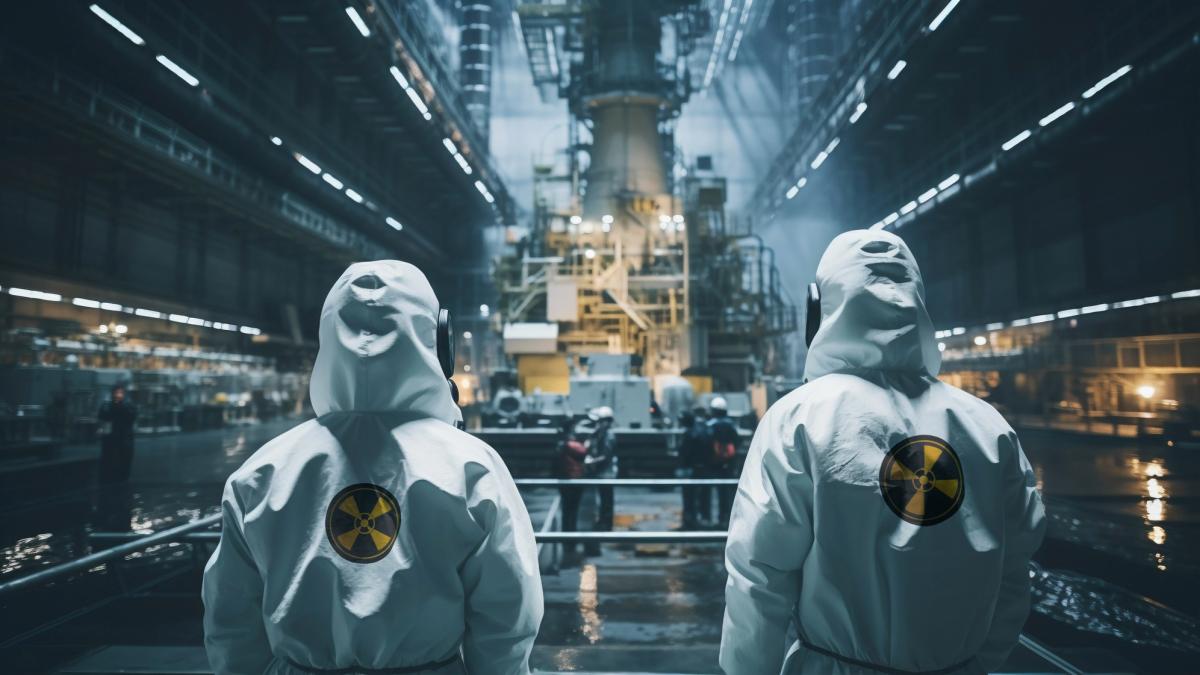
We are approaching the International Chornobyl Disaster Remembrance Day. 26 April 2026 will mark 40 years since one of the largest man-made disasters in human history - the accident at the Chornobyl Nuclear Power Plant.
This disaster was the result of a reactor experiment carried out under Moscow’s orders, in blatant violation of basic safety protocols.
Criminal negligence combined with the Soviet authorities’ attempts to conceal the truth about the accident and its consequences meant that the world remained unaware of the explosion for at least 2 full days, whereas the Soviet citizens were kept unaware of the accident for weeks. The Soviet authorities made people participate in a demonstration in the center of Kyiv and other locations across Ukraine on 1 May 1986, although the radiation was already in the air.
The radioactive release spread across Europe over ten days, far beyond the immediate region. 20,000 roentgens was the level of radiation in the destroyed reactor. For reference, only 500 roentgens for five hours is a lethal dose.
Over 145,000 square kilometres of land were contaminated with radionuclides, and 8.5 million people were exposed to radiation. In Ukraine, approximately 2.4 million people were affected. Data on contamination was classified by the Soviet regime until 1989.
Four decades later, the consequences of the nuclear catastrophe of this enormous scale are still present and have to be dealt with.
On this day, 26 April, we honor the memory of and pay tribute to over 600,000 heroic liquidators who risked and sacrificed their health and lives to save the world from the horrific consequences of the disaster.
For Ukrainians, Chornobyl is not only the story of a crime and a tragedy. It is also a story of heroism of ordinary people. A verdict to the entire Soviet system and its lies.
The lessons of the past, concerning nuclear safety and security, remain very relevant today. On 24 February 2022, as Russia launched its full-scale aggression against Ukraine, the world once again faced a nuclear threat which this time was masterminded and executed by the aggressor state. For the first time in human history, an aggressor state used military force to seize nuclear power plants. Attacks on civilian nuclear facilities in Ukraine and blatant violations of international law have become an integral part of Russia’s armed aggression.
The Chornobyl Exclusion Zone became one of the first sites captured by Russian invasion forces. The estimated damages caused by Russia’s occupation of the Chornobyl Exclusion Zone lasting nearly a month amount to approximately €100 million. Alomgside the Chornobyl NPP, the aggressor state also captured the Zaporizhzhia Nuclear Power Plant – the biggest nuclear power plant in Europe. It still remains under Russia’s illegal occupation and is heavily militarised.
On the night of 13-14 February 2025, Russia struck the New Safe Confinement at the Chornobyl NPP, employing a “Geran-2” combat drone. It was a deliberate attack. The strike damaged both the outer and inner shells of the confinement structure (the NSC arch) and disabled the main crane system.
In Ukraine, three nuclear power plants are now operational. We registered many instances of dangerous Russian drone flights over them and reckless strikes at their critical substations during the past winter. This led to emergency reactor shutdowns, pushing us towards other disasters. High professionalism, skills and dedication of Ukrainian nuclear energy workers make it possible to maintain safe control of nuclear reactors under such extreme conditions, keeping Ukraine and the entire Europe safe.
The lessons from the past demand that the international community takes a principled and effective action to ensure political, economic, and legal consequences for Russia’s crimes that undermine global nuclear safety. These should include, in particular, sanctions against Rosatom.
Restoring global nuclear safety is impossible without returning to Ukraine full control of all civilian nuclear facilities on its sovereign territory.
It requires unity and common purpose in our actions to prevent the repetition of nuclear disasters like in Chornobyl forty years ago.
Ihor Prokopchuk
Ambassador of Ukraine to Romania