




EXCLUSIV Italy in the Hormuz crisis: diplomacy, naval missions and food security. Editorial by Minister Tajani
18 Mai 2026
IMCO reaffirms its long-term commitment to Romania, aiming to transform the country into a regional hub of excellence for advanced military technologies. Through the opening of the IMROD facility in the fall of 2025, the company is transitioning from simple assembly to local Research and Development (R&D), directly involving Romanian engineers in the creation of intellectual property. The expansion strategy is an ambitious one; Ariel Kandel, CEO of IMCO Group, estimates a tenfold increase in activity over the coming years, supported by the expansion of production capacities in Ilfov County to approximately 6,000 square meters.
The partnership aims to modernize the Black Sea fleet and land platforms through the integration of smart control and display systems, mission computers, and AI-based solutions for predictive maintenance. These technologies, built on a modular architecture compatible with NATO standards, allow the Romanian Armed Forces rapid integration of new weapons systems and superior situational awareness. The localization of these solutions through IMROD ensures increased autonomy for Romania and the ability to adapt technology to the specific operational needs of the Eastern Flank.
IMCO Group offers a diverse range of integrated electronic and tactical solutions for the land, naval, and air domains, specializing in advanced power management systems and power distribution units, high-performance mission computers, and "glass cockpit" solutions with smart displays. Their portfolio also includes low-latency 360° situational awareness video systems, electro-optical sensors, tactical LED lighting systems, as well as scalable digital infrastructures that enable the integration of artificial intelligence algorithms for predictive maintenance and real-time decision support. All these solutions are designed on open and modular architectures, being compatible with NATO standards to facilitate the rapid modernization of existing combat platforms.
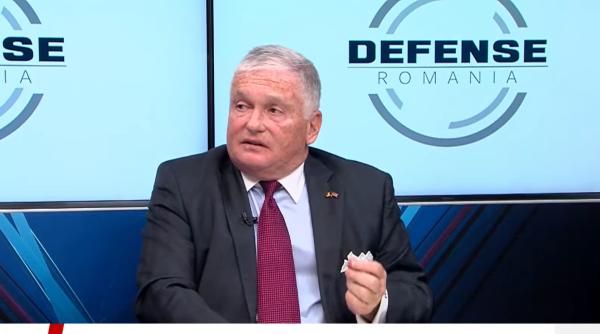
We present the full interview granted to DefenseRomania by Ariel Kandel, CEO, IMCO Group.
DefenseRomania: In the context of Romania’s growing capability requirements in the Black Sea, how do IMCO’s advanced control systems and smart displays enhance the performance and modernization of existing combat vessels—and what unique advantages do they offer compared to standard solutions from major OEM integrators
Ariel Kandel, CEO, IMCO Group: Our control systems and smart display technologies are built around a modular architecture that supports NATO standards, enabling the rapid integration of platform upgrades and updates. We work closely with Tier 1 integrators to ensure that platforms receive the required enhancements quickly, efficiently, and within budget - something our partners consistently value.
In the context of Romania’s growing capability requirements in the Black Sea, this flexibility becomes essential. Once implemented on naval platforms, our technology helps address evolving operational needs in a very practical way. As multi-domain threats continue to change rapidly, onboard electronics must support seamless software upgrades and the straightforward integration of new weapon and defense systems. This is precisely the kind of future-ready approach we are focused on delivering.
At the same time, we see this not just as a technology deployment, but as a long-term partnership opportunity. Our model supports Romania’s national industrial objectives through local presence and collaboration. These systems can be integrated, maintained, and further developed in-country, creating meaningful opportunities for Romanian engineers and suppliers to contribute to ongoing programs, such as SAFE, and to integrate into NATO supply chains.
From an operational perspective, the impact is immediate and tangible. Our systems improve situational awareness, accelerate decision-making, and reduce crew workload by consolidating complex data into intuitive, user-friendly interfaces. Ultimately, our goal is to empower operators with clearer, faster insights. These capabilities are not theoretical - they are built on technologies that have been validated over years of real operational use.
DefenseRomania: Given IMROD’s portfolio, which includes 360° situational awareness video systems and mission computers, how do you integrate artificial intelligence into predictive maintenance and energy management solutions to increase the survivability rate of land platforms in modern theaters of operation?
Ariel Kandel, CEO, IMCO Group: Our approach to integrating artificial intelligence into land platforms is built around three key principles: infrastructure, speed, and operational flexibility. Rather than locking customers into proprietary algorithms, we support a wide range of AI models and allow each customer to deploy its own - whether developed internally or sourced from third parties. This gives them greater control over doctrine, data governance, and the long-term evolution of their systems.
At the core of this capability is a high-performance digital backbone. We provide advanced communication infrastructure, along with low-latency, high-bandwidth video distribution systems, enabling large volumes of data to flow continuously from 360-degree situational awareness systems, mission computers, and other platform subsystems. This is critical because it allows AI models to operate in real time, within a true operational decision window.
Two concrete examples illustrate how this works in practice. Our 360-degree Panoramic Situational Awareness System is designed to integrate a wide range of AI solutions - either from our own portfolio or selected by the customer - to support applications such as threat detection and neutralization, driver assistance, and real-time decision-making.
In parallel, our HUMS - Health and Usage Monitoring System - leverages AI-driven data analysis to identify, in real time, conditions that require immediate crew action. This directly supports both vehicle survivability and predictive maintenance.
All of this is delivered through our modular AI infrastructure, which supports multiple concurrent AI modules across visual, data, and other domains. It’s a scalable and future-ready framework that can evolve alongside operational requirements.
For Romania, this approach also creates real added value beyond the platform itself. By enabling open integration of AI models, local users and industry partners can adapt solutions to specific operational needs, rather than depend on fixed architectures. We see this as an important step toward building sustainable, sovereign capabilities over time.
DefenseRomania: The opening of the IMROD subsidiary in the fall of 2025 marks a clear step toward localization. To what extent does the group intend to involve Romanian experts and engineers in the research and development (R&D) process, moving beyond simple assembly or serial production toward the creation of local intellectual property?
Ariel Kandel, CEO, IMCO Group: The opening of IMROD in Romania is not just a footprint expansion - it is a strategic investment in Romania’s long-term defense industrial capabilities. A central element of this strategy is the integration of Romanian engineers into the full R&D lifecycle, not just in assembly or production. Our core areas of expertise - armored vehicle technologies, advanced video systems, and air defense - provide a strong foundation for this collaboration.
Our clear objective is to move beyond assembly toward the creation of local intellectual property, tailored to Romanian and European operational requirements and fully aligned with the highest European Mil-spec standards. This includes both adapting existing IMCO Group technologies and enabling locally driven development programs over time.
Romania has a strong engineering base and a rapidly evolving defense industrial ecosystem, which makes it a very natural partner for us. By embedding local talent into core development activities, we aim to strengthen national know-how and ensure that the solutions we develop are closely aligned with the operational realities of the Black Sea region, as well as NATO’s ongoing defense modernization efforts.
At the same time, this commitment is backed by a concrete and ambitious growth plan. Over the coming years, IMROD has the potential to scale its activity significantly - up to tenfold - including expanding facilities to approximately 6,000 square meters and substantially increasing the number of engineering and technical personnel. We see this as a long-term partnership, focused on building both capability and capacity in Romania.
DefenseRomania: IMCO’s strategy mentions the role of a “local supplier” for European projects. How do you envision collaboration with other players in Romania’s national defense industry (state-owned or private companies) to create an integrated industrial ecosystem capable of exporting complex systems to other NATO members?
Ariel Kandel, CEO, IMCO Group: Our positioning as a local supplier in Europe is very much based on building a collaborative industrial ecosystem in Romania, rather than operating as a standalone vendor. We are focused on developing long-term partnerships with Romanian defense companies - both state-owned and private - as well as with leading European integrators.
A key avenue for this collaboration is participation in multinational programs under initiatives such as SAFE, where we bring capabilities in control systems, power management, video systems, and mission-critical electronics. These types of programs naturally require close coordination across multiple industrial players, and we see Romania as an important contributor in that context.
At the industrial level, our approach is based on complementarity. We work with Romanian integrators, subsystem providers, and manufacturers to co-develop solutions that are fully aligned with NATO requirements. This includes joint engineering efforts, shared production models, and coordinated integration activities.
Ultimately, our goal is to help create an ecosystem that is not only capable of supporting national requirements, but also competitive at the European level. By combining local expertise with proven technologies and strong partnerships, we believe Romania can play a meaningful role in exporting complex, high-value systems to other NATO members.
Romania is central to IMCO’s European strategy. Through IMROD, we are building a local base that enables integration into land, naval, air, and air defense programs, both nationally and across Europe. This platform will also support the growth of Romanian defense exports by strengthening local capabilities and participation in international supply chains.
DefenseRomania: In the context of increasing European security investments, what is the scaling capacity of the facility in Romania over the next 3–5 years? Are there plans for IMROD to become a regional center of excellence in specific niches, such as “glass cockpit” systems or components for air defense?
Ariel Kandel, CEO, IMCO Group: IMROD’s expansion in Romania is designed to align with the accelerating pace of European defense investment - particularly under initiatives such as SAFE - and with the growing strategic importance of NATO’s eastern flank. Our scaling path over the next three to five years is closely linked to participation in European programs, strong partnerships, and collaboration with Romanian and European integrators, ensuring that growth is anchored in real demand and clear export potential.
From the outset, IMROD is being built as an R&D-led site. We are integrating Romanian engineers into core development processes, while also supporting production and leveraging IMCO Group’s more than five decades of experience in designing interoperable, multi-domain systems. The objective is to deepen local capabilities, enable meaningful technology transfer, and generate intellectual property in Romania - this is a key priority for us.
An important part of this trajectory is our involvement in Romanian and European armored vehicle programs. Drawing on IMCO Group’s extensive experience in mission-critical systems for armored platforms, IMROD is well positioned to support both modernization efforts and future programs with combat-proven, open-architecture solutions. This naturally creates opportunities for local integration, engineering, and long-term in-country support.
At the same time, we do see strong potential for IMROD to evolve into a regional center of excellence in specific niches - such as advanced “glass cockpit” systems, mission computers, and components for air defense. This will be driven by market demand, but also by the capabilities we are building locally and the partnerships we are developing.
Backed by IMCO Group’s high-end technological infrastructure, IMROD is positioned to provide Romania with both immediate operational capabilities and a long-term industrial platform - one that supports national resilience and deeper integration into the European defense ecosystem.